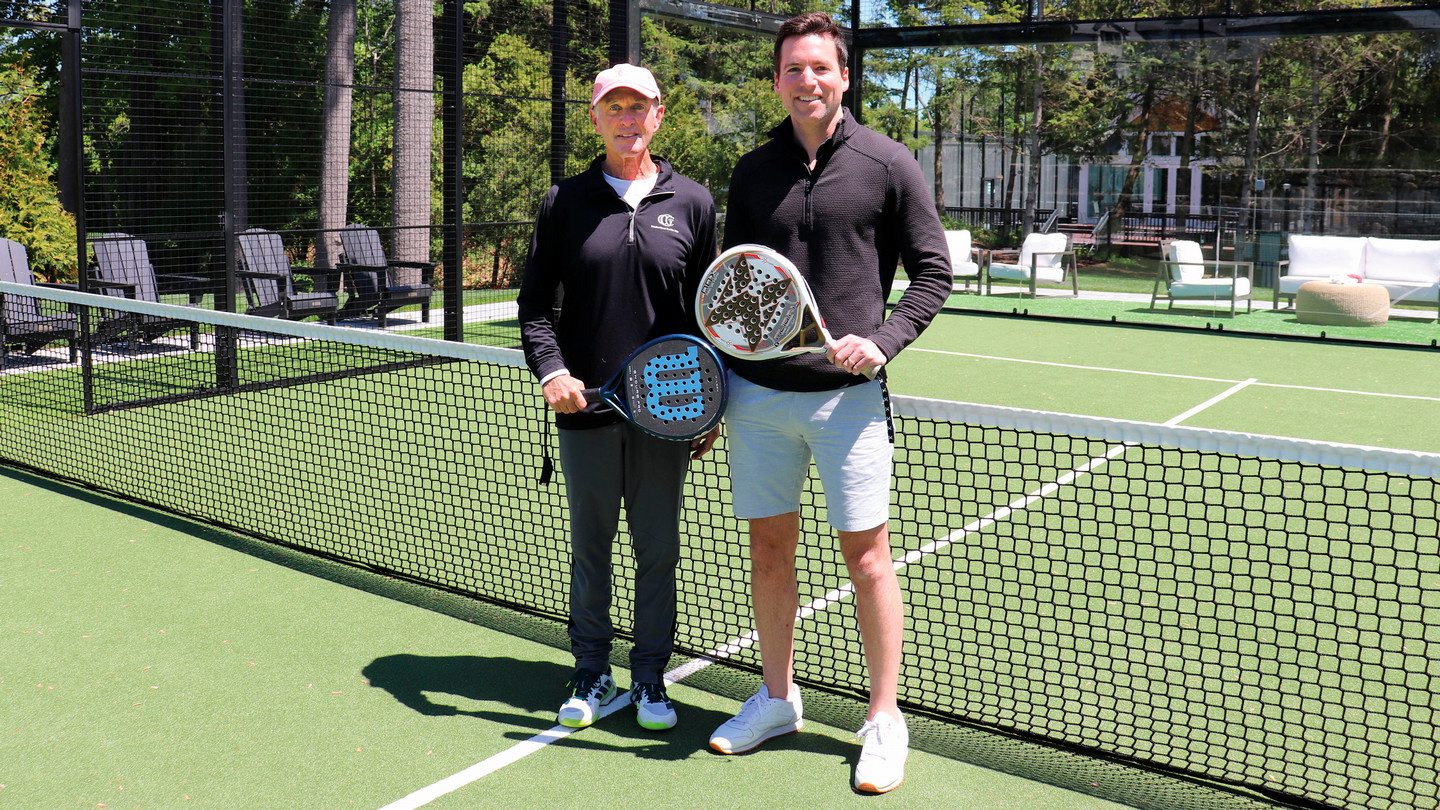
Q&A with Gray Bigler '04, Cofounder of OTL Courts & Design
Taft Bulletin, Fall 2026
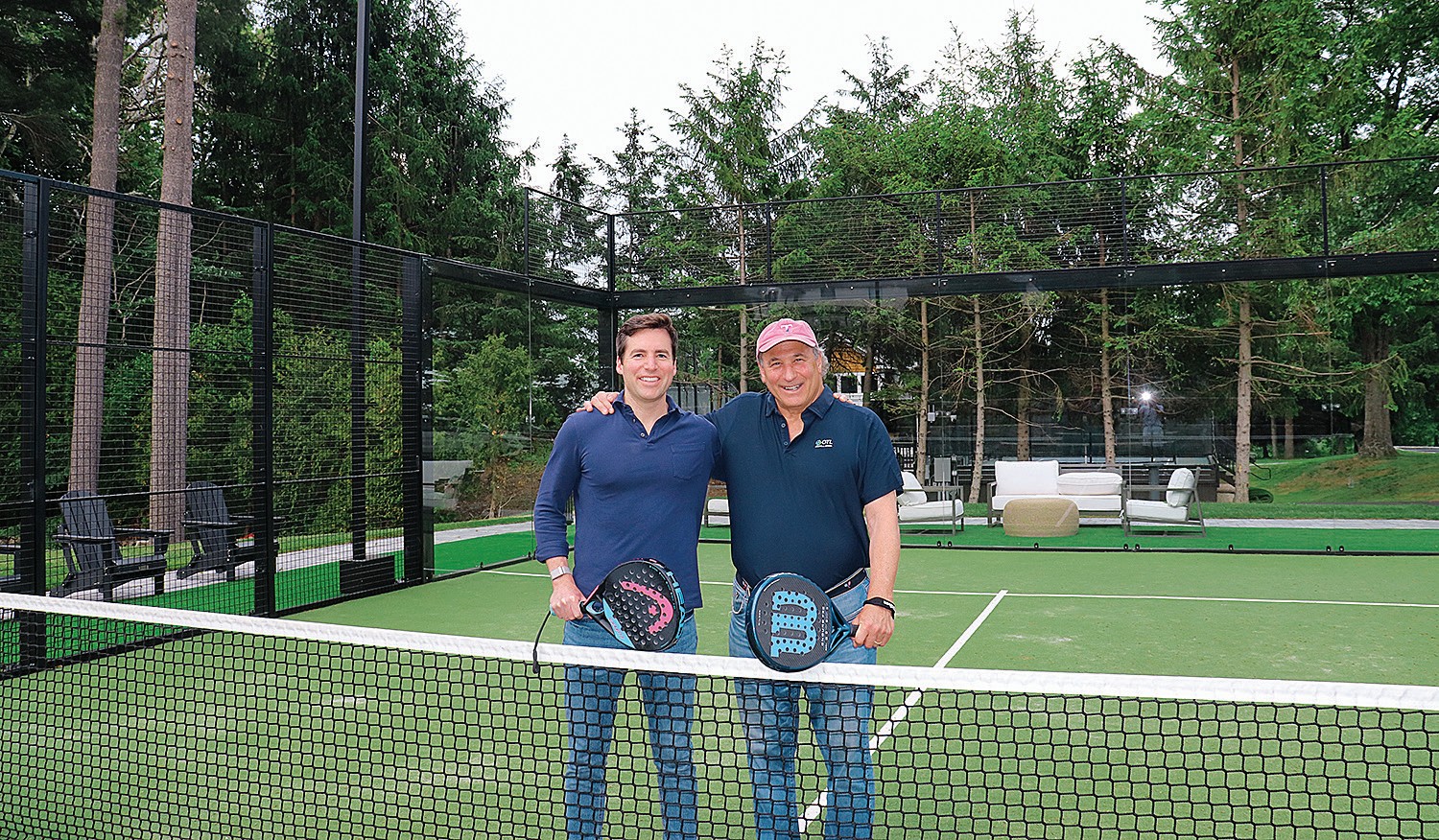
Courtesy Taft Bulletin, Taft School, Fall 2026.
What led you to start OTL Courts & Design with your father, Paul '74, and brother, Griffith '08? And how did you end up focusing on padel courts in particular?
It started with me falling for a sport on the other side of the world. My career has taken me through Paris, Singapore, and Sydney, and I've been lucky to play a lot of different sports competitively. It was in Sydney, while I was working as a management consultant, that I discovered padel.
I was hooked from the first session. Within weeks I was playing several times a week and organizing my entire social life around the club, and I even picked up a national ranking in Australia.
When I moved back to the U.S. in 2017, there were almost no public courts to play on. So I watched the sport grow from a distance. My dad, who was a teaching tennis pro in his earlier life, said at some point, "We have to figure out how to get into this."
We spent two years exploring angles and educated ourselves on the supply side, and learned of MejorSet, the Spanish manufacturer that builds courts for Premier Padel and the International Padel Federation. Also, my brother, Griff, joined MejorSet as a regional manager, giving us a window into the industry. Our conclusion was that being the right kind of distributor, one that helps clubs and developers succeed as businesses rather than just selling them the courts, was the best way to grow the sport on the East Coast and the most compelling business to build. We launched OTL, Outside The Lines, about a year and a half ago.
For people who might not know about it yet, how would you describe padel? And why do you think it's growing so quickly right now, both in the U.S. and around the world?
Padel is a doubles racket sport played on an enclosed court roughly a third the size of a tennis court, with tempered glass walls and a synthetic turf surface. You hit over a net like in tennis, but you can also play the ball off the walls, the way you would in squash. That's the magic of it. In tennis, once a ball gets past you the point is over. In padel, the wall gives you a second chance.
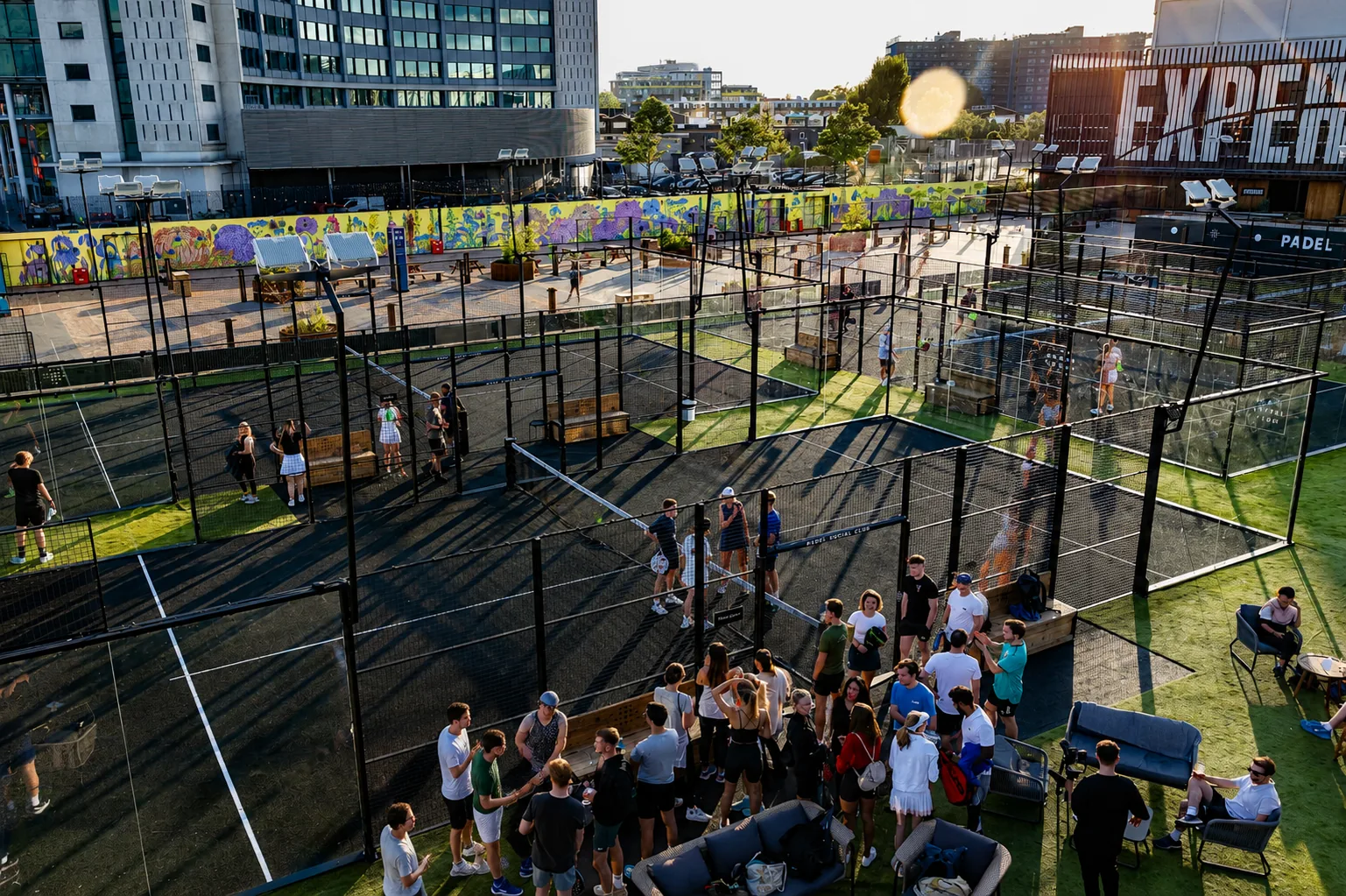
It is also easy to pick up. Almost everyone is rallying within 30 minutes, partly because the serve is underhand, which removes what is probably the single biggest barrier to entry in tennis. And because it is almost always played in doubles on a small court, it is intensely social. You walk off the court having made friends. Industry data shows about a 92% return rate after a player's first try.
The growth has looked different in different parts of the world. In Europe and Latin America, padel evolved more like pickleball did here, with lower build costs and broader access. In the U.S., it has arrived primarily as a premium racquet sport, in part because building courts here is expensive and in part because the early adopters have been private clubs, resorts, and high-end developers. The American market is young, but just hit a real inflection point. In April, the country opened its 1,000th court, with the sport now present in 37 states and an active player base that has crossed one million.
The other accelerant is cultural. Rafael Nadal has built academies and is one of the sport's leading ambassadors. David Beckham, Lionel Messi, Andy Murray, and Jimmy Butler all play seriously. Nearly all of the F1 drivers play. Serena Williams was announced as Heineken's global brand ambassador as part of a partnership built around padel. When people see the athletes and entertainers they already follow gravitating toward a sport, they want in.
What products and services does OTL offer its customers?
Being a distributor opened the door, but I never wanted to build a company that was just reselling courts. Coming out of consulting, fintech, and an INSEAD MBA, I kept asking myself the same questions: What is the one thing we do that nobody else does, and what would the industry miss if we disappeared tomorrow. The answers shape everything we offer.
Today, OTL is the East Coast U.S. distributor for MejorSet, and we run the full life cycle around that. That means design and architecture support for clients thinking beyond just courts, because padel is a social sport and most of our clients also want clubhouses, viewing areas, and food and beverage alongside it. It means permitting, which is very involved. We deal with sound, lighting, traffic, and environmental questions like whether the blue turf will confuse migrating birds. It means engineering and construction coordination. It means logistics, getting 40-foot containers from Spain through East Coast ports, navigating tariffs, and arranging cranes at sites that are often remote. And it means everything afterward, from maintenance to helping operators think through membership, programming, and revenue beyond court bookings.
The clients we work best with, country clubs, resorts, and developers, want a partner who can manage the full project intelligently or plug into the pieces where they already have trusted architects and contractors. Our job is to meet them where they are.
What's been the most rewarding part of building a business in this fast-growing sector so far?
A few things, and they show up in different parts of my life.
The first is the energy of the industry. After roughly 15 years in consulting and fintech, I had come to know what a mature, capital-saturated market feels like. Padel is the opposite. The rules are still being written, and there is real room to build something that matters.
The second is the founder experience. There is real ownership in helping shape the direction of a business, real accountability for the decisions, and, candidly, a level of flexibility that has been a gift now that I have two young kids. Being able to be present for the small moments at home is something I did not fully appreciate until I had it.
The third, and the part I will remember most, is doing this with family. My father, Griff, and I each bring something different to the table: his decades in racquet sports, Griff's deep view of the manufacturing side, and my background in strategy and technology. You never know how much time you really get with the people you love, and getting to build something with my dad and my brother, on the back of a sport I genuinely love, is not a privilege I take for granted.
View the printed version